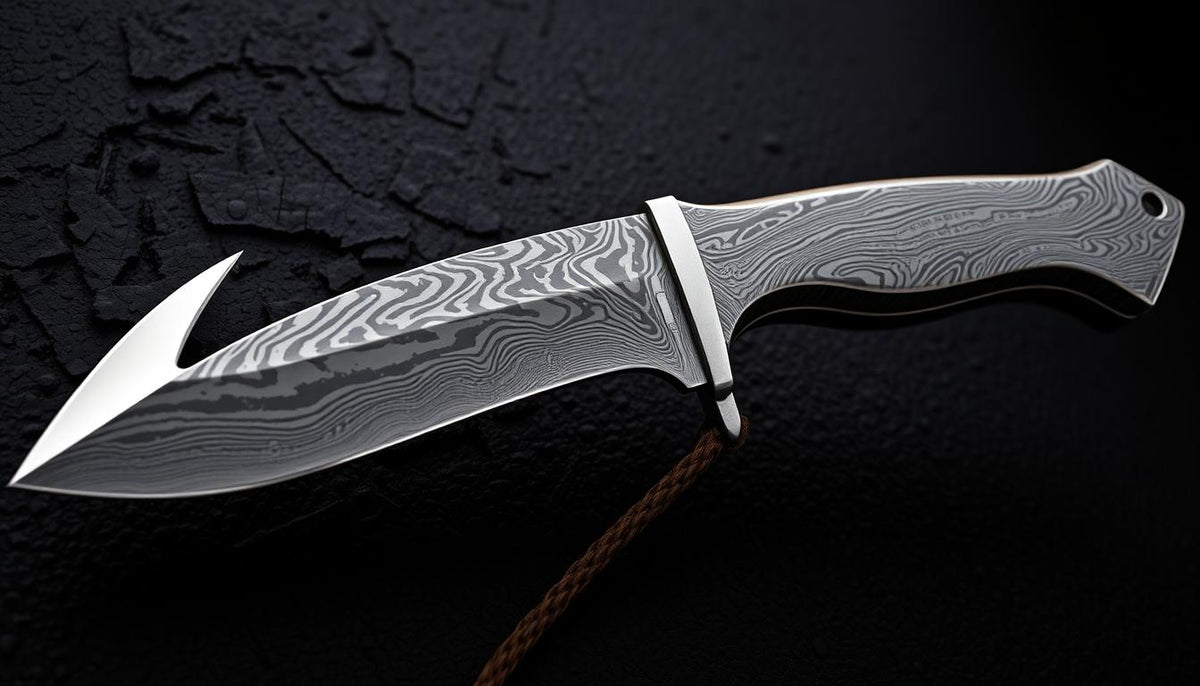
Direct answer: Seven Damascus1 folding pocket knives, priced today from $39.99 to $49.99, differ mainly in handle look and in how much the catalogue actually documents. The Stag Horn Damascus Folding Pocket Knife at $49.99 lists a Damascus blade, brass bolster and back lock. The other six list wood, horn or a black-and-white handle design. Manufacturing origin is not verified for any of them, despite the legacy wording in this page address.
That last point stays at the front. The handle of this article — the slug in the web address — contains the words "made-in-usa" because an older version of the page used them. The handle is kept unchanged so the existing address continues to work. A kept address is not evidence: nothing in the current catalogue pages verifies a country of manufacture for these folders, and this comparison does not assign one. Anyone for whom origin decides the purchase needs model-specific documentation before ordering.
What follows is a catalogue comparison, not a performance test. No hands-on trials or measured results sit behind it. Each section separates what a product page states, what a photograph shows, and what still needs confirmation for the selected option. Prices were checked on 19 October 2026. For a shorter shortlist first, see the guide to the best Damascus pocket knife options.
Are these seven knives really made in the USA?
No verified answer supports a USA-made claim for any of the seven. The catalogue pages describe handles, blades, bolsters and locks, but they do not document where a blade was made or where final assembly happened. A United States store, a domestic dispatch address and the legacy words in this page address each prove something different, and none of them proves manufacturing origin.
That distinction sounds picky until money changes hands. Origin is a common gift requirement, and treating a URL as proof would fail that buyer even if the knife arrived exactly as photographed. Three questions hide inside the phrase: where was the blade produced, where was the folder assembled, and where does it ship from? The third is easiest to answer and least relevant — a knife can ship from a domestic warehouse and still have been manufactured elsewhere.
Anyone who needs origin confirmed should send the exact product link and ask for documentation tied to that model. A general statement about a store or a different knife does not transfer. If the reply does not answer the question, the field stays marked "not confirmed." For many gift buyers that gap will not matter — handle, price and presentation decide the purchase. For a buyer who stated origin as a requirement, it is a reason to pause.
What does "hand-forged Damascus" actually mean here?

On Damascus1, "hand-forged" and "handmade" appear as the store's own catalogue description language for these folders. That wording is reported here as catalogue language, not as a verified account of a particular forge, maker or production process. The product pages state a Damascus steel blade. They do not publish a layer count, a steel grade, a hardness figure or a heat-treatment record for these seven models.
Modern listings use the word Damascus for patterned blade constructions, and the visible pattern is the part a buyer can actually see. Swirls and layered-looking bands run across the blades in the catalogue photographs. Those photographs show surface pattern; they do not confirm which steels sit inside it, how many layers were folded, or how the edge was treated.
Shoppers comparing a hand forged damascus pocket knife across stores will meet confident technical language everywhere — counts, grades and numbers offered without a source. Where a number matters, it needs documentation for the specific model. Where it does not, the visible things become the honest basis for choice: handle as listed, lock where listed, contents, price and terms. Pattern still has real value — a patterned blade presents differently in a box and gives a recipient something specific to notice. That is a legitimate reason to buy one, in a different category from a measured performance claim. The broader best pocket knife guide gives wider context.
Which seven Damascus pocket knives are being compared?
The seven are all Damascus1 folding pocket knives sold under a 6.5-inch model label: olive wood, blue wood and green wood sets at $39.99 each, a buffalo horn set at $39.99, a ram horn folder at $44.99, a stag horn folder at $49.99, and a black-and-white folder at $39.99. Five cost $39.99. Only the ram horn, stag horn and black-and-white listings document a back lock in the catalogue.
Order below groups the knives for reading — woods together, horns together. It is not a ranking; no comparative testing stands behind this article. Each card states the price checked on 19 October 2026 and the detail that separates that model from the other six. Prices can change, so the live page remains the final word.
1. Olive Wood Damascus Pocket Knife Set — $39.99 (was $89.99). The Olive Wood Damascus Pocket Knife Set lists an olive wood handle and a Damascus steel blade. Catalogue photographs show the folder alongside a leather sheath, a sharpening rod and a small companion knife. Olive grain varies, so the photographed handle guides the look rather than promising identical grain. The traditional, warm-toned wood choice, at the joint-lowest price here.
2. Blue Wood Damascus Pocket Knife Set — $39.99 (was $99.99). The Blue Wood Damascus Pocket Knife Set is the colour-led choice. "Blue wood" is the catalogue description; the page does not document a wood species, stabilisation process or coating, and none is assumed here. Photographs show the same presentation as the olive set — folder, sheath, rod and companion knife. Colour is the honest reason to pick it: a gift that looks chosen rather than generic, for $39.99.
3. Green Wood Damascus Pocket Knife Set — $39.99 (was $99.99). The Green Wood Damascus Pocket Knife Set is the second coloured-wood option. Green reads quieter than blue and pairs differently with the patterned blade, but the logic is identical: colour first, then confirmation of contents and dimensions. A shared colour name with other catalogue knives does not establish the same blade or package. At $39.99 it matches the lowest price here, distinctly different from the natural woods.
4. Buffalo Horn Damascus Pocket Knife Set — $39.99 (was $99.99). The Buffalo Horn Damascus Pocket Knife Set lists a natural buffalo horn handle, dark in the catalogue photographs. Natural horn carries individual variation, so two examples will not look identical — a point in its favour for a one-person gift. Photos show the folder with sheath, rod and companion knife. At $39.99, the lowest-priced horn option and the natural alternative to the wood sets.
5. Ram Horn Damascus Folding Pocket Knife — $44.99 (was $99.99). The Ram Horn Damascus Folding Pocket Knife is where the catalogue documentation steps up. Its page states a Damascus blade, a brass bolster and a back-lock mechanism — a lock description the set pages do not carry in the same way. Ram horn gives a textured, ridged look, clearly different from smoother buffalo horn. Only one catalogue photograph exists for this model, so questions about closed profile and contents matter more. The price is $44.99.
6. Stag Horn Damascus Folding Pocket Knife — $49.99 (was $139.99). The Stag Horn Damascus Folding Pocket Knife is the highest-priced model here at $49.99 and the knife in the cover photograph. The catalogue states a Damascus blade, brass bolster and back lock, and mentions a sheath and sharpening rod; the full packing list still needs confirmation. Stag shows the most rugged texture of the three horn handles. The extra $10 buys that character and the fullest presentation described here.
7. Black & White Damascus Folding Pocket Knife — $39.99 (was $99.99). The Black & White Damascus Folding Pocket Knife lists a black-and-white handle design, a brass bolster and a back lock. One honesty note belongs in the card: the exact handle material is not stated on its product page, so this comparison does not assign it one. Guessing horn, bone or a synthetic from a photograph would be exactly the shortcut this rewrite exists to remove. What is documented is the striped, high-contrast look, plus bolster and lock, for $39.99.
How do the seven compare at a glance?

Five of the seven cost $39.99 today. The ram horn folder costs $44.99 and the stag horn folder costs $49.99. Three listings — ram horn, stag horn and black-and-white — document a brass bolster and back lock. The three wood sets and the buffalo horn set document their handle material and Damascus blade. Every model carries the same ambiguous 6.5-inch size label, explained in the size section below.
| Model | Handle (as listed) | Lock / notes (only where documented) | Price today | Best for |
|---|---|---|---|---|
| Olive Wood Damascus Pocket Knife Set | Olive wood | Set photos show sheath, rod, companion knife | $39.99 | Best for a natural, traditional wood look |
| Blue Wood Damascus Pocket Knife Set | Blue wood | Set photos show sheath, rod, companion knife | $39.99 | Best for colour — a blue handle gift |
| Green Wood Damascus Pocket Knife Set | Green wood | Set photos show sheath, rod, companion knife | $39.99 | Best for colour — a quieter green handle |
| Buffalo Horn Damascus Pocket Knife Set | Buffalo horn | Natural horn, individual variation; set photos as above | $39.99 | Best for a dark horn handle at the lowest price |
| Ram Horn Damascus Folding Pocket Knife | Ram horn | Damascus blade, brass bolster, back-lock per catalogue; one photo only | $44.99 | Best documented lock description among the horn models |
| Stag Horn Damascus Folding Pocket Knife | Stag horn | Brass bolster, back lock per catalogue; mentions sheath and rod | $49.99 | Best for the most textured horn look |
| Black & White Damascus Folding Pocket Knife | Black-and-white design (material not stated) | Damascus blade, brass bolster, back lock per catalogue | $39.99 | Best for a high-contrast striped handle |
Read the table as a map of documentation, not a league table. A shorter notes cell does not prove a knife lacks a feature; it proves the listing does not state it. "The ram horn listing states a back lock — does the olive wood set use the same mechanism?" is an answerable enquiry; "Which one is best?" is not. The compare pocket knife sets page and the first Damascus pocket knife checklist support the same exercise.
Which handle material should you choose — wood, horn, or the black-and-white design?
Choose by look, variation tolerance and the recipient, because the listings do not support a performance ranking between these handles. Wood gives a familiar, warm grip appearance in natural olive or dyed-looking blue and green. Horn gives natural variation — no two pieces match exactly. The black-and-white design gives contrast, but its exact handle material is not stated on the product page, so material questions need asking first.
Start with the woods. Olive is the traditionalist option: visible grain, warm tones. Blue and green change the gift's personality without changing the format, and colour solves a practical problem — a recipient who already owns brown-handled knives receives something visibly different. The trade-off is documentation: the listings name the colours without documenting species or treatment, so a buyer who needs a specific wood must ask. The pocket knife handle materials comparison covers handle families across the catalogue.
Horn asks how much natural variation the recipient enjoys. Buffalo runs dark and smooth; ram shows heavier texture; stag shows the boldest relief. The delivered handle will resemble the photographs without duplicating them — a help for a personal gift, an obstacle for a matched pair. The black-and-white folder in one line: the most graphic look here, documented bolster and back lock, undocumented material, $39.99.
What does the 6.5-inch label actually tell you about size?
Less than it appears to. Every one of the seven is sold under a 6.5-inch model label, but the listings do not state whether that figure is the blade length, the open length or the closed length. A single undefined number cannot settle pocket fit, sheath fit or legal blade-length questions. Buyers who need a specific measurement should request open length, closed length and blade length separately, each with its unit.
The distinction is not academic. Closed length decides pocket and sheath fit. Blade length answers different questions, including local carry rules. Open length describes the tool in use. A label that could mean any of the three substitutes for none of them.
A short request solves it: open length, closed length, blade length and weight for the exact model, with the reply kept alongside the order. The pocket knife size measurement guide explains how those measurements are taken. Carry law in one sentence: rules vary by place, this article is not a law chart, and no label shortcut replaces checking current official rules using the confirmed blade length.
How do you tell a real Damascus folder from a printed-pattern imitation?

Start with what can be checked, not what can be claimed. On a genuinely patterned blade, the design typically continues across the blade surfaces in a way a surface print does not, and photographs, written description and price should tell one consistent story. Where description and photograph disagree, or technical claims arrive without documentation, the honest response is a question to the seller — not automatic trust, not automatic accusation.
Printed imitations exist across the wider knife market, so scepticism is reasonable. The walkthrough in how to spot a fake Damascus knife covers checks from photographs and in hand: pattern behaviour at the spine and edge, consistency between both blade sides, and the difference between a pattern in the metal and one sitting on top of it. Those checks narrow the field; they cannot replace steel documentation.
Price proves nothing in either direction: a low price does not prove a blade is printed, and a high price does not prove it is layered. These seven sit between $39.99 and $49.99 against higher compare-at prices — a pricing fact, not construction evidence. Keep two judgements separate: whether the delivered knife matches its photographs, checkable on arrival, and whether the store documents its construction, which needs paperwork requested before payment. Model-specific reviews help with the first; they cannot establish a steel grade.
What should you confirm about the set contents before ordering?
Confirm the exact packing list for the selected option, in writing, before paying. Photographs for the olive, blue, green and buffalo horn set models show four items together: the main folder, a leather sheath, a sharpening rod and a small companion knife. A photograph shows a presentation. It does not, by itself, promise that every item pictured ships with every option, colour or order, so essential items belong in a pre-order question.
This is where disappointment is cheapest to prevent. A gift buyer planning around a sheath, rod or companion knife — perhaps because the presentation is half the gift — needs those items confirmed for the listing and option in the cart. "Set" in a title and the photographs point that way, but together they still fall short of a packing list. One message closes the gap: paste the product link and ask what that option includes at that price.
The stag horn listing needs the same treatment: its catalogue mentions a leather sheath and a sharpening rod, yet the complete packing list still needs confirmation. The ram horn and black-and-white listings say less about contents, so their buyers should ask too. Keep the reply — it becomes part of the order record. Outdoor-gift buyers may also want the guide to the best pocket knives for camping, remembering that a general outdoor description is not permission to pry, throw or split wood with a folder.
Can you get one engraved as a gift?
Yes, through a quote process rather than a fixed add-on. Damascus1 product pages invite buyers to request an engraving design quote for a name, initials or a short message of up to 25 characters. Suitability, placement, a proof, the price and the timing are all confirmed before a custom order proceeds. No engraving price, discount or deadline is promised in this article, because none is published as a fixed term for these models.
Engraving suits these knives: a patterned blade and natural handle already look personal, and a short line of text completes the effect for birthdays, retirements and weddings. Twenty-five characters is short — a name, a date, initials with a year. Wording should be drafted tightly and checked character by character, spaces included.
Order of operations matters. Choose the knife first, because handle material and available surface affect where lettering can sit. Then send the exact product link and wording and ask for suitability, placement, proof, cost and timing as one package. The personalized pocket knife engraving guide walks through that sequence. A preview is not production approval. Custom work also follows a different timeline from stock, and personalised items can sit under different return conditions — so the full custom terms belong in the conversation before payment.
How do you care for a Damascus folding knife?
Basic care is unglamorous and consistent: keep the blade clean and dry, wipe it after use, store the folder dry rather than sealed in a damp sheath, follow the instructions supplied with the actual model, and ask the store for model-specific guidance where instructions are missing. No single sharpening angle or chemical treatment is established for all seven knives, so generic routines copied from other blades should not be applied as fact.
A folding knife adds moving parts. Pivot and lock need to stay free of grit and pocket lint, and the knife should open and close without force. A back lock, as documented on the ram, stag and black-and-white models, engages at the handle's spine; keeping that area clean keeps it working as designed. A folder that develops play or stiffness should be set aside and discussed with the seller, not adjusted by guesswork.
The sharpening rods in the set photographs deserve a measured word: a rod in a photo confirms a rod in the presentation, subject to the packing-list check, but no universal technique comes with it. Angle and pressure depend on the blade, and the Damascus folding knife care guide, plus the instructions shipped with the knife, is the right starting point. Storage: dry, wiped before it goes away. Miracle oils, guaranteed finishes and lifetime services do not appear in current store terms and are not added here.
What do shipping and returns actually say?

The shipping policy bases delivery estimates on item availability and the shipping option selected, and notes that restrictions apply for some products and destinations. The refund policy accepts returns within 30 days for unused products in original condition, with tags, original packaging and proof of purchase. Shipping fees are non-refundable. The site banner states free shipping and returns above $50, a threshold a single knife in this group does not reach on its own.
Each clause does quiet work. Availability-based estimates mean a stock knife and an engraved knife live on different clocks, so a buyer working to an occasion date should ask about the specific order. Destination restrictions mean deliverability should be confirmed for the exact item, particularly for a gift sent across state or national lines.
The returns wording rewards a careful first inspection: a recipient who carries a knife for a week before changing a decision has likely moved outside "unused, original condition." Open the parcel promptly, check the knife against its photographs and confirmed packing list, confirm any engraving matches the approved proof, and raise mismatches immediately. Two absences belong here: current terms promise neither a lifetime warranty nor free lifetime sharpening, and this article adds neither.
How should you choose between these seven?

Choose on the three things that genuinely separate them: handle look, documented lock and bolster details, and the presentation described for that model — then confirm size and contents for the winner. Price barely helps, since five models share $39.99 and the whole group spans only $10. A recipient-first shortlist of two, checked against the product pages on the day of ordering, beats a long comparison of all seven.
Run that shortlist like this. Start with the handle the recipient will enjoy seeing daily: traditional olive or coloured blue and green; smooth dark buffalo, textured ram or bold stag; or the graphic black-and-white design. That one preference usually cuts seven knives to two. Then apply the documentation test: does the listing state the lock and bolster details that matter, in writing? Ram horn, stag horn and black-and-white state a brass bolster and back lock, which makes the black-and-white model, at $39.99, the documentation bargain of the group.
Then run the confirmation pass on the final two: dimensions and weight, packing list, engraving suitability if the gift needs words, delivery timing, and origin documentation if origin is a requirement. Unanswered items stay marked unconfirmed, never filled in from a neighbouring listing — copied details caused real confusion in older versions of this page. The trade-offs are honest ones: set models show fuller presentations but lighter lock documentation; described folders state more detail but show fewer photographs. That identifies a fit, not a winner.
Frequently asked questions
Short answers, kept consistent with the store terms and catalogue documentation above. Where an answer depends on the selected option, the option — not a neighbouring model — decides it.
Are all seven knives made in the USA? No verified answer supports that claim. Origin is not documented for these models, and the legacy wording in this page address is not proof. Anyone who needs origin confirmed should request documentation for the exact model before ordering.
Does Damascus mean a knife is better than stainless steel? No universal ranking follows from those labels. Patterned construction and stainless classification describe different things, and no performance test stands behind this comparison. Documented materials, intended use and care instructions are the useful comparison points.
Does every option include the same set contents? That cannot be assumed. Set photographs show a folder, sheath, rod and companion knife together, but the complete packing list belongs to the selected option. Confirm essential items in writing before ordering.
Can a sheath be chosen from the 6.5-inch label alone? No. The label does not state whether it measures blade, open or closed length, so it cannot establish sheath fit. Ask for closed length, width and thickness with units, then match a sheath to those figures.
How does engraving work, and what does it cost? Product pages invite a design quote for a name, initials or a short message up to 25 characters. Suitability, placement, proof, price and timing are confirmed before a custom order proceeds. No fixed price or deadline is published, so the quote is the only reliable figure.
What happens if the knife is not right? The refund policy accepts returns within 30 days for unused products in original condition, with tags, packaging and proof of purchase. Shipping fees are non-refundable. Inspect the knife promptly, before use, and raise mismatches straight away. Custom orders should have their terms confirmed before payment.
Ready to decide? Start with the two strongest fits: the Stag Horn Damascus Folding Pocket Knife at $49.99 for the boldest natural handle, or the Black & White Damascus Folding Pocket Knife at $39.99 for documented bolster and back lock with the most distinctive design — and line either up against the Olive Wood Damascus Pocket Knife Set at $39.99 on the compare pocket knife sets page. Confirm size, contents and engraving, check the cart against the free shipping threshold above $50, and order when every field that matters reads confirmed.
Leave a comment: